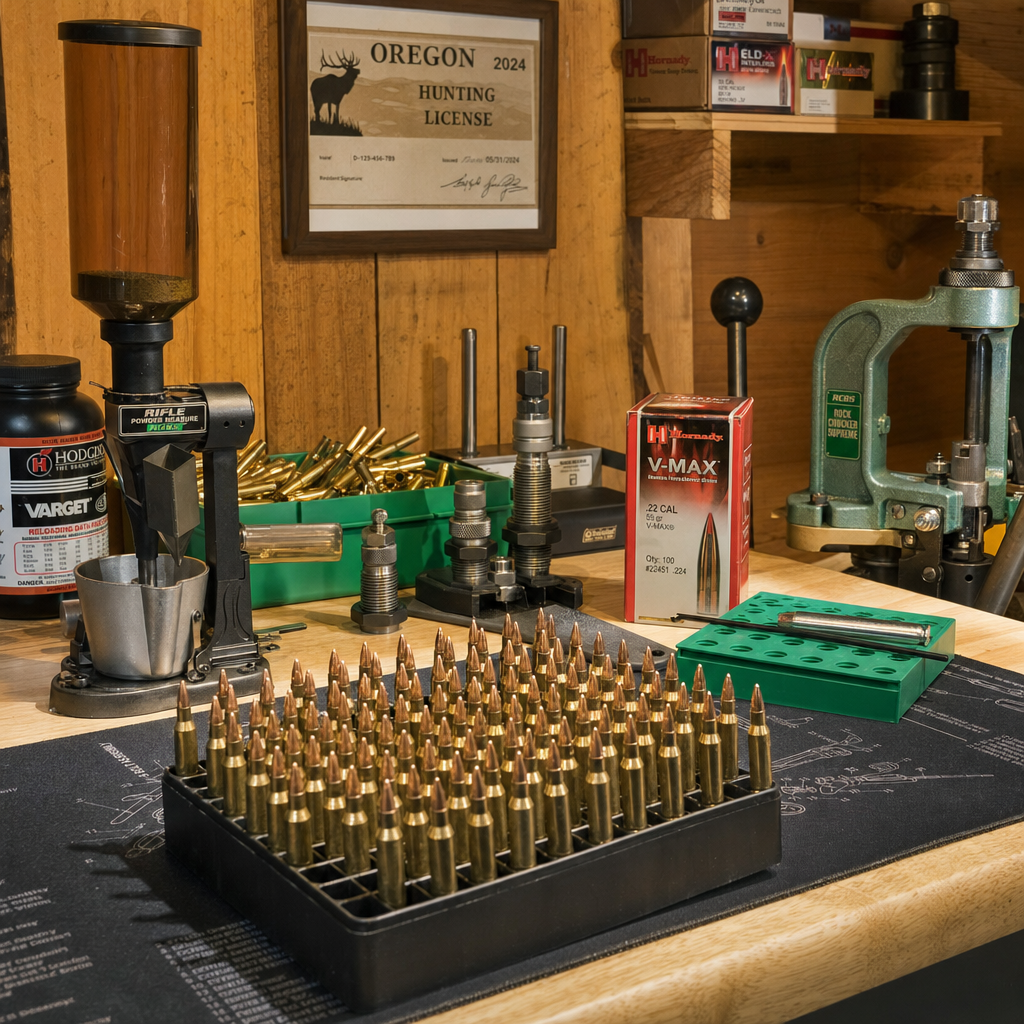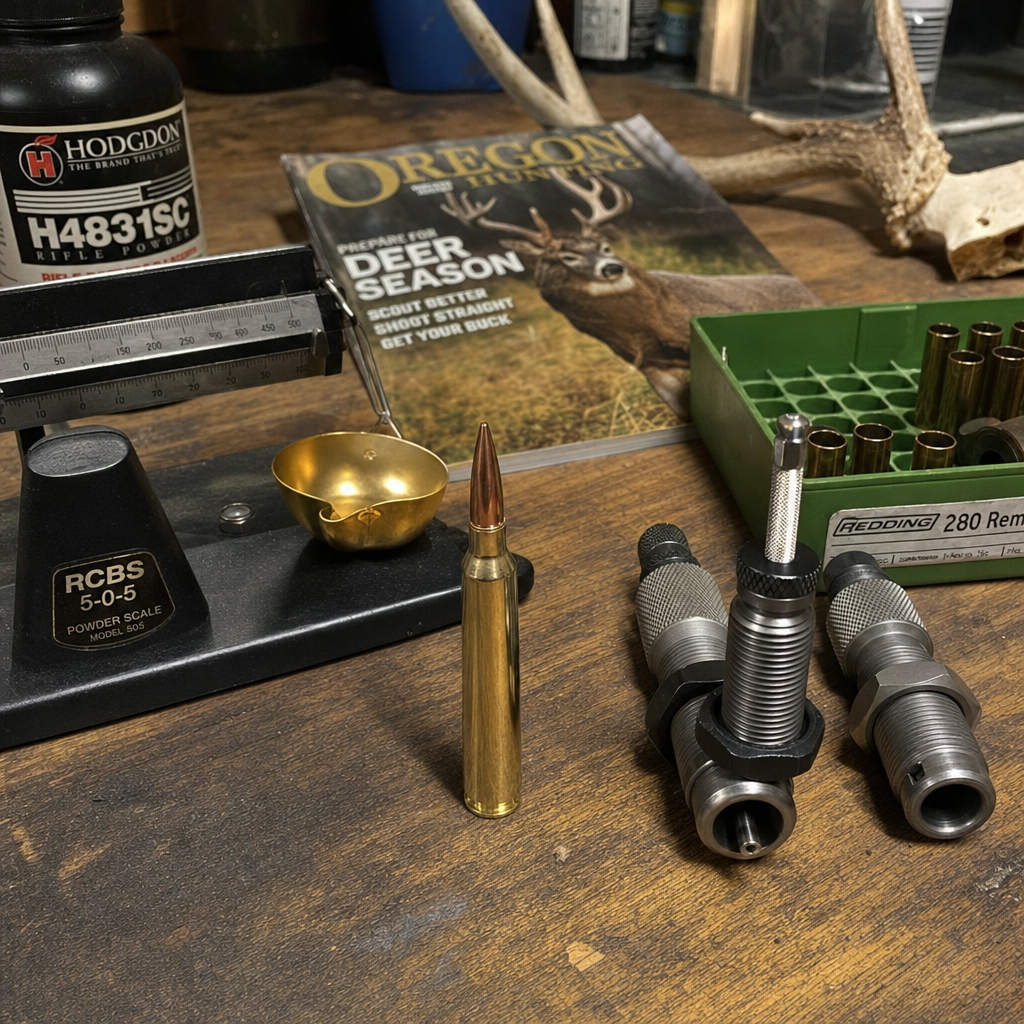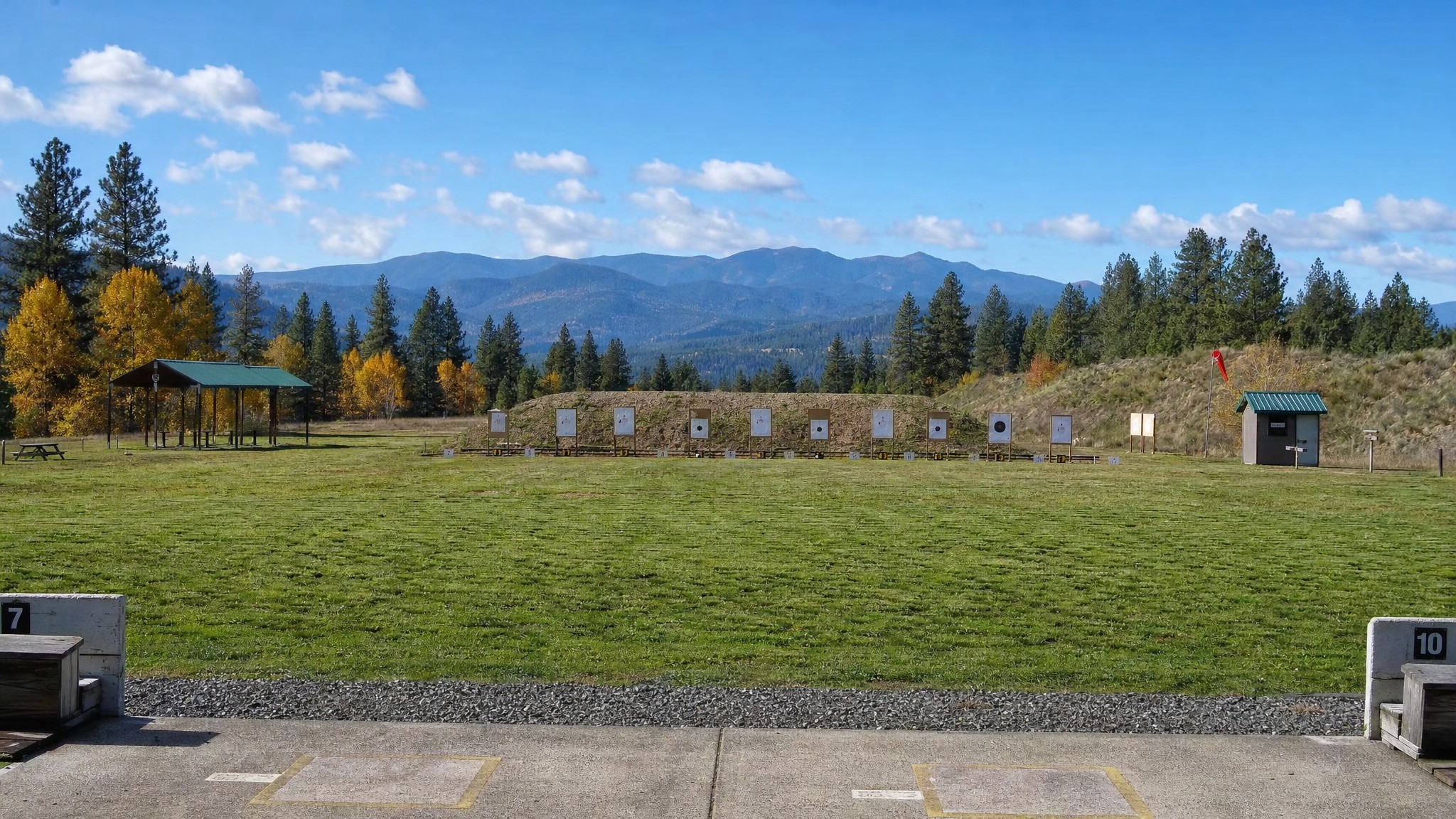
Ask a room full of Oregon hunters what cartridge they reload most, and odds are strong that .308 Winchester tops the list. It's the round chambered in everything from lightweight mountain rifles to heavy-barreled precision rigs, it's incredibly well-documented in every major reloading manual, and it performs reliably on mule deer in the high desert, blacktail in the coast range, and Roosevelt elk in the timber. If you're new to reloading and want to start somewhere smart, start here. If you've been at it for years, there's always something to refine in a .308 load.
Why the .308 Winchester Dominates Oregon Reloading Benches
The .308 Win (SAAMI-standardized twin to the military's 7.62x51mm NATO) has been with us since 1952. In that time it's become the gold standard for bolt-action accuracy, the most common precision rifle competition cartridge, and a proven deer and elk round. Oregon hunters find it at home in almost every environment the state offers:
- Willamette Valley and coast range blacktail at 50–200 yards through heavy timber
- High desert mule deer in the John Day and Owyhee country at 200–400 yards
- Roosevelt elk in the Blue Mountains and Cascades at close to moderate range
- Long-range paper punching at the Tri-County Gun Club in Prineville or the Eastern Oregon Shooting Sports complex
Brass is everywhere, dies are cheap, and load data is abundant. These aren't small advantages.
Brass Selection and Prep
Federal, Hornady, Lapua, and Winchester all make excellent .308 brass. For hunting loads, Federal and Winchester brass is perfectly adequate and cost-effective. For precision target work where extreme uniformity matters, Lapua brass is worth the premium — it has tighter dimensional tolerances and outstanding neck concentricity.
Always full-length resize hunting brass that's been fired in another rifle. If you're working up loads for a single dedicated hunting rifle, you can get away with neck-sizing only after the first firing, which improves brass life and can tighten groups. Trim to 2.005" (SAAMI trim length) if brass has stretched, and deburr/chamfer case mouths after trimming. A primer pocket uniformer pays dividends in ignition consistency on match-grade loads.
Powder Selection
The .308 Winchester has a case capacity that pairs well with medium-burn-rate powders. These are the ones Oregon reloaders rely on most:
- Hodgdon Varget: The go-to powder for .308 accuracy. Temperature-stable (important for Oregon's swing from cold November mornings to hot August afternoons), meters well, and produces outstanding accuracy with 168–175 grain match bullets. Start around 42.0 gr, max around 44.5 gr with 168 gr Berger or Sierra MatchKing.
- IMR 4064: A classic .308 powder that's been producing accurate loads since the 1950s. Slightly faster than Varget, works exceptionally well with 150–165 grain hunting bullets. 41.0–43.5 gr with a 165 gr Hornady SST is a proven Oregon deer load.
- Hodgdon H4895: Versatile and accurate, slightly more sensitive to temperature than Varget but very forgiving in compressed loads. Good with 150–168 gr projectiles.
- Alliant Reloder 15: A favorite among precision shooters for its accuracy potential with match bullets. Can be harder to find in rural Oregon, so stock up when you see it.
- Hodgdon CFE 223: Copper-fouling eraser additive, works well with lighter .308 bullets (125–150 gr) for target work and varminting on the edge of .308's range.
Bullet Selection by Use Case
Blacktail and Mule Deer
The 150–165 grain range is the sweet spot for Oregon deer. Hornady's 165 gr SST, the Sierra 165 gr GameKing, and the Federal Trophy Bonded Bear Claw at 165 gr are all proven performers. For deer at under 200 yards in thick timber, a 150 gr Nosler Ballistic Tip hits hard and expands reliably. For longer shots in open country, step up to a 165 gr bonded bullet that holds together at high velocity close-range impacts.
Roosevelt and Rocky Mountain Elk
Elk demand a heavier, tougher bullet. The 168–180 gr range with premium controlled-expansion construction is what Oregon elk guides recommend. Nosler Partitions at 180 gr, Federal Trophy Bonded at 180 gr, and the Hornady 178 gr ELD-X (for shots out to 400 yards) are all excellent choices. Avoid standard cup-and-core bullets on elk — they can blow up on heavy shoulder bone before reaching the vitals.
Long-Range Target and Precision Competition
The .308 rules PRS club matches and F-Class competition at 600–1,000 yards. The Sierra 168 gr MatchKing (G1 BC ~0.447) has been the gold standard for decades. The Berger 175 gr Hybrid Target has surpassed it in recent years for wind-bucking performance at distance. Seat to 2.800" COAL or tune seating depth to 0.020"–0.040" off the lands in your specific barrel for the best groups.
Starting Load Data (Always Verify Against Current Manual)
- 150 gr Hornady SST / IMR 4064: Start 41.5 gr, max 44.0 gr | COAL 2.800" | ~2,820–2,950 fps
- 165 gr Sierra GameKing / Varget: Start 42.0 gr, max 44.5 gr | COAL 2.800" | ~2,650–2,750 fps
- 168 gr Sierra MatchKing / Varget: Start 42.0 gr, max 44.0 gr | COAL 2.800" | ~2,580–2,680 fps
- 175 gr Sierra MatchKing / Varget: Start 41.0 gr, max 43.0 gr | COAL 2.800" | ~2,520–2,620 fps
- 180 gr Nosler Partition / H4350: Start 40.0 gr, max 42.5 gr | COAL 2.800" | ~2,450–2,580 fps
Always begin at starting loads and work up. Verify against Hodgdon, Hornady, Lyman, or Sierra current manuals. These figures are reference only.
Primers
Federal 210M (Match) primers are the benchmark for .308 accuracy. CCI BR-2 and Winchester Large Rifle primers are excellent for hunting loads. Avoid magnum primers in standard .308 loads — you'll see pressure spikes without meaningful velocity gains.
Consistency Is Accuracy
The .308 rewards consistency over exotic components. Weigh every powder charge on a quality beam or electronic scale. Seat bullets to within 0.001" of your target OAL. Inspect every case for cracks at the neck and web. Keep a reloading log — record your charge weights, seating depths, primer lots, and velocity data from your chronograph. The difference between a 1 MOA load and a half-MOA load in a quality .308 barrel is almost always in the consistency of the ammunition, not the components themselves.
Final Thoughts
The .308 Winchester has earned its reputation the old-fashioned way — by working. Oregon hunters and shooters who invest time in developing quality handloads for their specific rifles will find it's one of the most satisfying cartridges to reload. The components are available, the load data is thorough, and the downrange results speak for themselves. Whether you're dropping a Coast Range blacktail buck at 80 yards or ringing steel at 800, a carefully assembled .308 load is hard to beat.