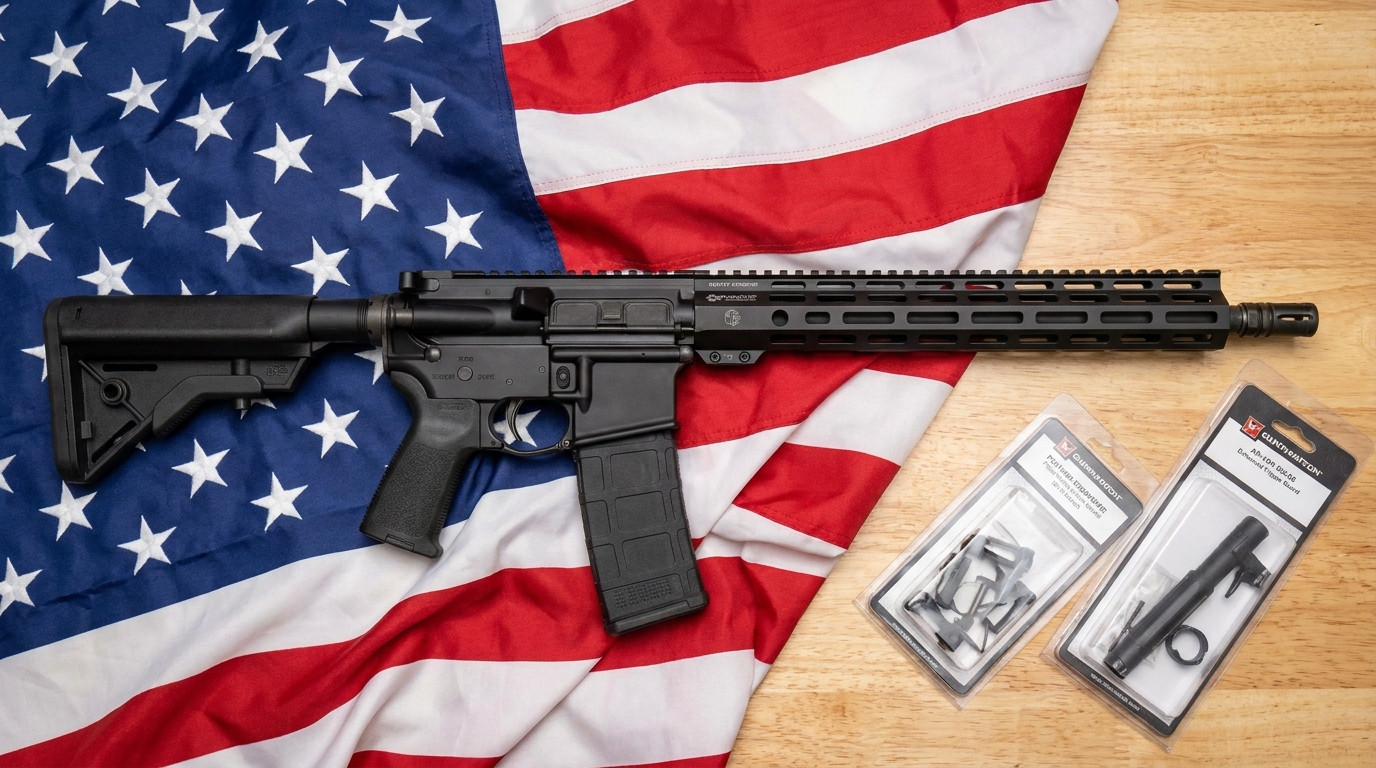
The AR-15 platform is one of the most modular rifle systems ever designed, which means there's an endless list of upgrades you can spend money on — most of which won't meaningfully improve your shooting. I've owned and built more AR-15s than I care to count, and over the years I've developed a pretty clear sense of which upgrades move the needle and which are expensive cosmetics. Here are the changes that deliver real, measurable improvement for under $300 total.
1. Trigger Upgrade ($75–$150)
The mil-spec trigger in most entry-level AR-15s breaks at 7–9 pounds with significant grit. This is one of the worst triggers on any common firearm platform. A drop-in trigger unit (DITG) from Triggertech, LaRue MBT-2S, Geissele SSA, or CMC can bring your break down to 3.5–4.5 pounds with a clean, predictable reset. This single change will do more for your accuracy and shooting speed than any barrel, muzzle device, or stock upgrade. The LaRue MBT-2S is probably the best value in AR triggers at around $90.
2. BCG and Buffer Upgrade ($50–$80)
If your carbine runs reliably with factory ammo, don't fix what isn't broken. But if you're experiencing any cycling issues — light primer strikes, failure to eject, excessive felt recoil — a quality bolt carrier group and a properly tuned buffer and spring can solve them. An H2 or H3 buffer in a carbine with a mid-length gas system smooths out the cycling impulse significantly. BCGs from Aero Precision, Toolcraft, or PSA (nitride-coated) are excellent at reasonable prices.
3. Free-Float Handguard ($80–$150)
Factory handguards on budget AR builds often put pressure on the barrel, affecting the natural harmonic behavior of the barrel during firing and degrading accuracy potential. A free-float handguard — one that attaches to the receiver rather than the barrel nut and doesn't touch the barrel — removes this variable and often tightens groups noticeably. M-LOK handguards from Aero Precision, BCM, or Midwest Industries provide excellent rigidity and flexibility for accessory mounting.
4. Quality Charging Handle ($40–$65)
The mil-spec charging handle is functional but mediocre for precision work or running the rifle under stress. An ambidextrous or extended latch charging handle — BCM Gunfighter, Radian Raptor, Strike Industries Extended — makes manipulations faster and more reliable, especially with an optic mounted where your thumb would normally want to go. For $45, the BCM Gunfighter is hard to beat.
5. Sling and QD Mounts ($30–$60)
A two-point sling isn't the flashiest upgrade, but it's one of the most useful. A Magpul MS1 or MS4 sling keeps the rifle secured when transitioning to a sidearm, allows a shooter to build tension into the sling for improved stability in field positions, and prevents you from ever setting the rifle down somewhere inconvenient in the field. QD mounts front and rear make it system-agnostic. This is a $50 upgrade that every AR-15 should have.
What Not to Waste Money On
- Muzzle brakes (useful for mitigating recoil in calibers above .223, but .223 doesn't need it)
- Fancy pistol grips (ergo improvements are minimal for most shooters)
- Match barrels on rifles that haven't had trigger work done first
- Expensive stocks when a mid-range Magpul CTR or MOE is excellent
Invest in the trigger first, then the free-float handguard, then the charging handle. Those three upgrades under $300 will transform a budget AR into a genuinely capable precision carbine. Everything else is after you've mastered the fundamentals.