Mule deer hunting in Eastern Oregon is a glass-and-go game. You don't still-hunt through the timber hoping to bump a buck at 20 yards — you sit on a high point at first and last light, work the optics, and cover as much country as possible with your eyes before you ever move your boots. It's an acquired skill, and once you develop the eye for reading muley country, it becomes an obsession.
Where Mule Deer Live in the Off-Season
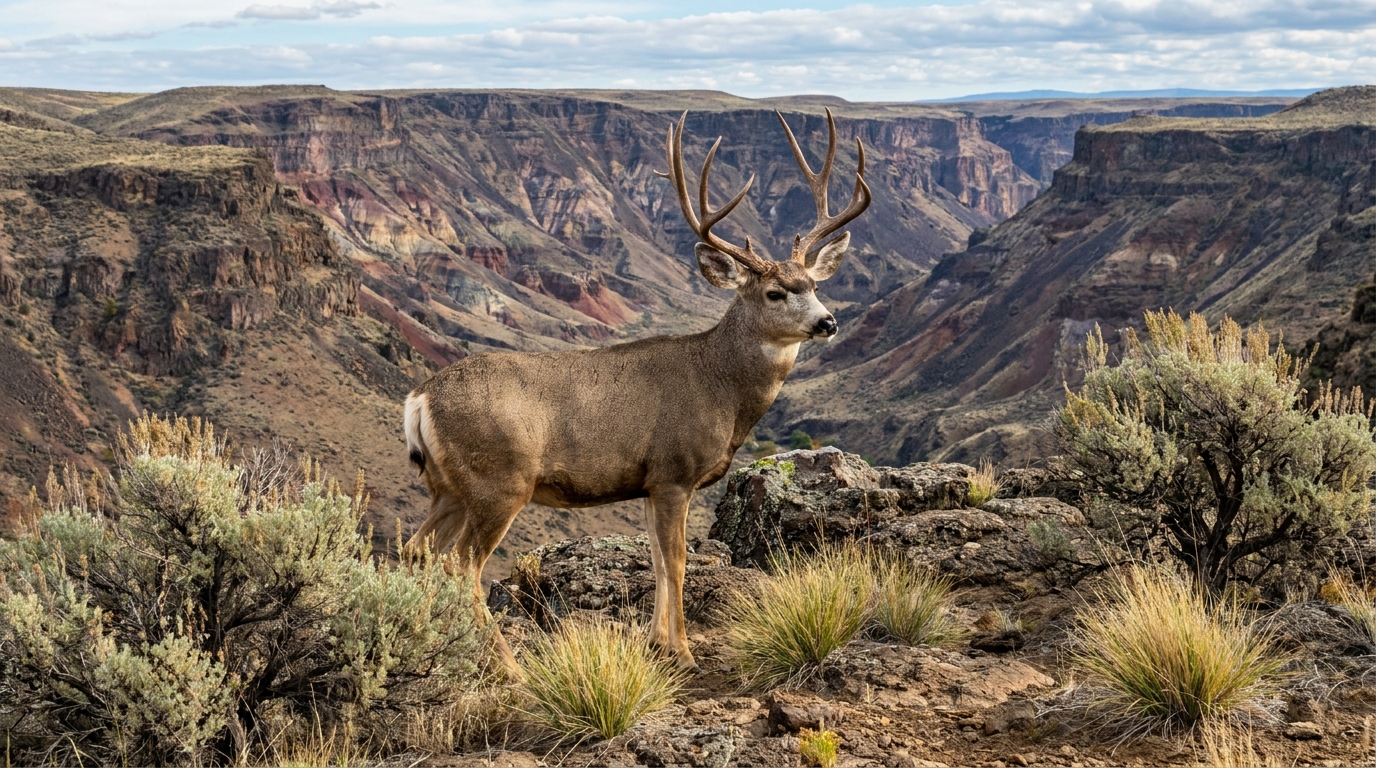
Summer bucks are predictable. They're on north-facing slopes and in high-elevation basins, feeding on forbs and using the cool air to manage their growing velvet antlers. This is the time to find your target buck — if you locate a 180-class deer in July, you have a very good chance of hunting that same ridge in October. Mule deer don't travel far from their summer range to their fall range, usually measured in miles rather than tens of miles.
In the Steens Mountain country, Harts Basin, and the Blue Mountains, look for bucks on finger ridges dropping off main benches, in creek drainages with willows and aspen, and in basalt rimrock country with adjacent sage flats. Bucks love to bed in places with multiple escape routes and good sight lines.
The Pre-Hunt Scouting Trip
I try to make at least one scouting trip in late August or early September before the season. I'm not after a specific deer at this point — I'm after information. Where are the water sources? Where are the freshest tracks and droppings concentrated? Where are the fence crossings the deer use regularly? This information doesn't change year to year unless there's a significant habitat change like a wildfire or a new road.
Invest in a quality spotting scope for this work. A 65mm or 80mm scope on a stable tripod at dawn and dusk will show you country in 10 minutes that would take hours to walk. I'll often sit a high point for two hours at first light, glass a dozen drainages, and know more about the buck population in that country than any hunter who just drove in the night before.
Reading Sign
Mule deer rubs differ from whitetail rubs — they tend to hit larger trees and often rub in the same spots year after year. Old velvet rubs on big sagebrush are easy to identify. Find a concentration of rubs in a saddle or creek bottom and you've found a travel corridor.
Tracks in creek mud or soft soil tell you size. A big muley buck leaves a track nearly the size of a cow elk — broad and rounded with a heavy impression. Split-hoof drag marks in dry conditions indicate a heavy animal. Learn to read sign and you can pattern deer without ever seeing them in daylight.
The Hunt Plan
Once you've located deer, build your approach around terrain features rather than distance alone. Use ridgelines and canyons to conceal your approach. Get to your glassing position before first light — mule deer are often still feeding or moving to bed in the early morning minutes. Make a solid plan before moving, and commit to it. The biggest bucks I've taken in Eastern Oregon were the result of patient observation followed by a calculated stalk, not a scrambled reaction to a surprise encounter.
Mule deer hunting is the kind of thing that rewards long-term investment. The country teaches you, year after year, and the knowledge compounds. Get out there and start putting in your time.