Electronic callers changed predator hunting the way trail cameras changed scouting. They're legal in most western states (always check regulations), they're consistent, and they free up your hands and attention for what matters — picking up movement and making the shot. But like any tool, they require skill to use effectively. A caller blasting jackrabbit distress at full volume into a stand of sage doesn't automatically bring coyotes. You need to know the sounds, the sequences, and the setups.
Choosing the Right E-Caller
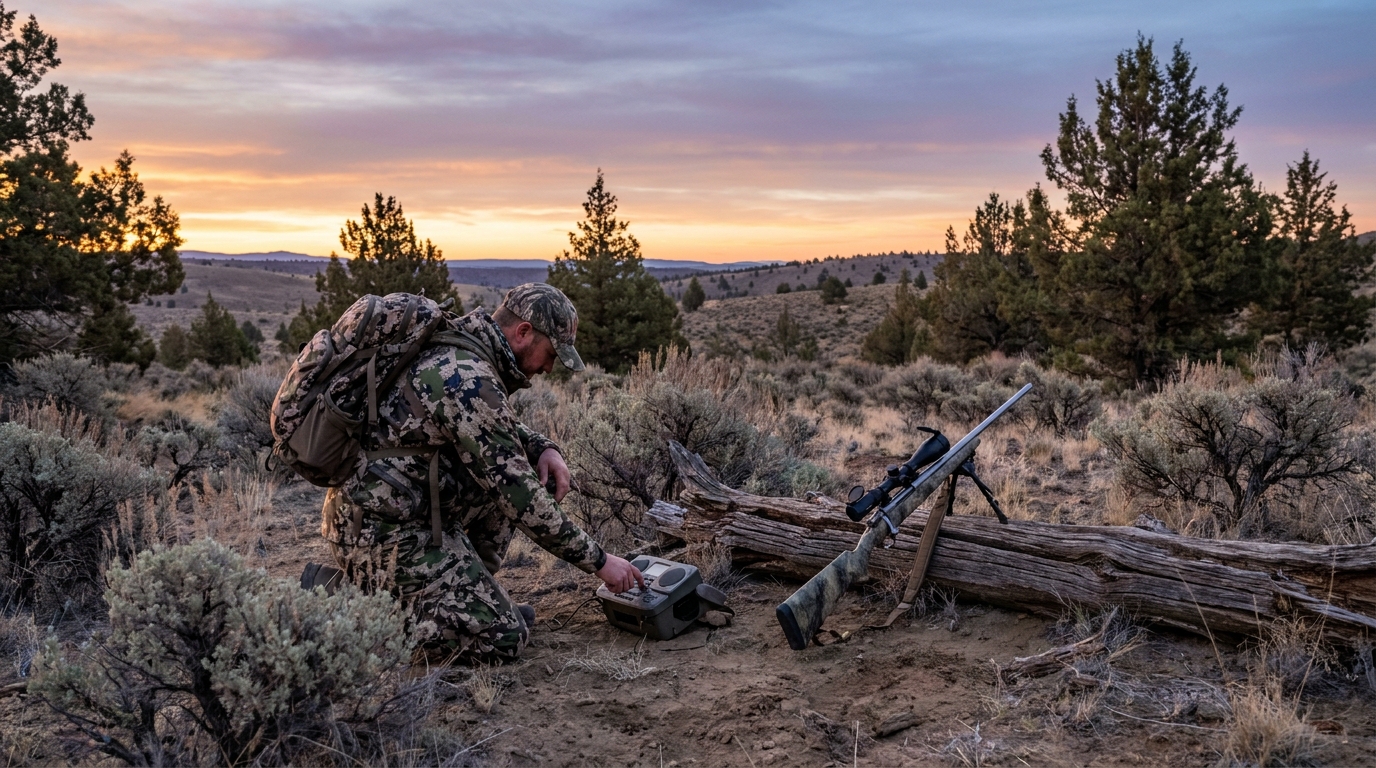
The market is dominated by a few brands: Foxpro, Lucky Duck, and ICOtec are the main players. What matters most is sound library quality, volume, remote range, and reliability in cold weather. I've run a Foxpro Shockwave for years and it's been bulletproof. For coyotes, 250+ sounds is plenty. For someone just getting started, the ICOtec GC300 or GC500 offer excellent value under $150.
Placement is critical. Set the caller 50–80 yards from your position, ideally in the open where a coyote can see it and commit. Don't put it in thick brush where approaching coyotes will hang up trying to locate the source. Some guys attach a decoy (like the Mojo Critter) to the caller — that visual movement can pull reluctant coyotes in the last 50 yards.
Sound Selection and Sequencing
The biggest mistake beginners make is using the same rabbit distress call at full blast every single stand. Educated coyotes in pressured areas have heard jackrabbit distress a thousand times. Mix it up.
Early Season Sequence (August–October):
- 0–3 min: Cottontail distress at medium volume
- 3–7 min: Silence — let them approach
- 7–12 min: Short coyote pup distress or ki-yi
- 12–18 min: Back to light distress, drop volume
- 18–22 min: Sit silent, watch downwind
Winter/Breeding Season (January–February):
- Start with lone female howl
- Follow with estrus chirps and whimpers
- Late in stand: add pup distress
Don't be afraid of silence. The pause between sequences is often when coyotes commit. They've heard the sound, they're interested, and they're working the wind. Give them time.
Wind, Setup, and Stand Discipline
No caller or sequence works if you're set up wrong. Wind is everything. Coyotes will almost always circle downwind before committing — if you're positioned with your back to the wind, you'll never see them. Sit with the wind in your face, caller placed upwind of you. Coyotes will come to the caller from downwind — right into your shooting lane.
Stay still. I can't stress this enough. Most blown stands are caused by hand movement scanning binoculars or fidgeting on a cold morning. Use a face mask. Keep your movements slow and deliberate. A coyote's eyes are extraordinarily good at picking up motion.
After the Shot
If you shoot a coyote and have a partner, have him reload the caller immediately while you stay on the gun. In a group of coyotes, the others will often linger or come back in to investigate. Some of my best doubles and triples have come in the 60 seconds after the first shot. Stay ready.
Electronic calling rewards hunters who understand coyote behavior and use the technology as a tool rather than a shortcut. Learn the sounds, learn the wind, and put in the stands. The fur will follow.