Long-range shooting has exploded in popularity over the last decade, and with it has come a lot of gear-focused conversation that can obscure the fundamentals. The truth is, a skilled shooter with a $1,500 rifle and a modest scope will consistently outperform a mediocre shooter with a $5,000 rifle and a top-tier optic. The foundation of long-range accuracy is built on position, trigger control, andunderstanding your ballistics — before the equipment conversation even starts.
Understanding Your Ballistic Solution
At long range, a bullet does not fly straight. It curves due to gravity (drop), drifts due to wind (deflection), and is affected by factors like air density (affected by altitude and temperature) and the Coriolis effect at extreme ranges. Before you shoot at any target beyond 300 yards, you need a solid ballistic solution.
Modern ballistic calculators — Applied Ballistics, Hornady 4DOF, Kestrel with AB or HBN — take your bullet's G1 or G7 BC, muzzle velocity, altitude, temperature, and wind data to produce drop and drift corrections in MOA or milliradians. Confirm the calculator's predictions against actual range dope: shoot groups at 300, 500, 700, and 1,000 yards to build verified drop data you can trust in the field.
Prone Position: The Gold Standard
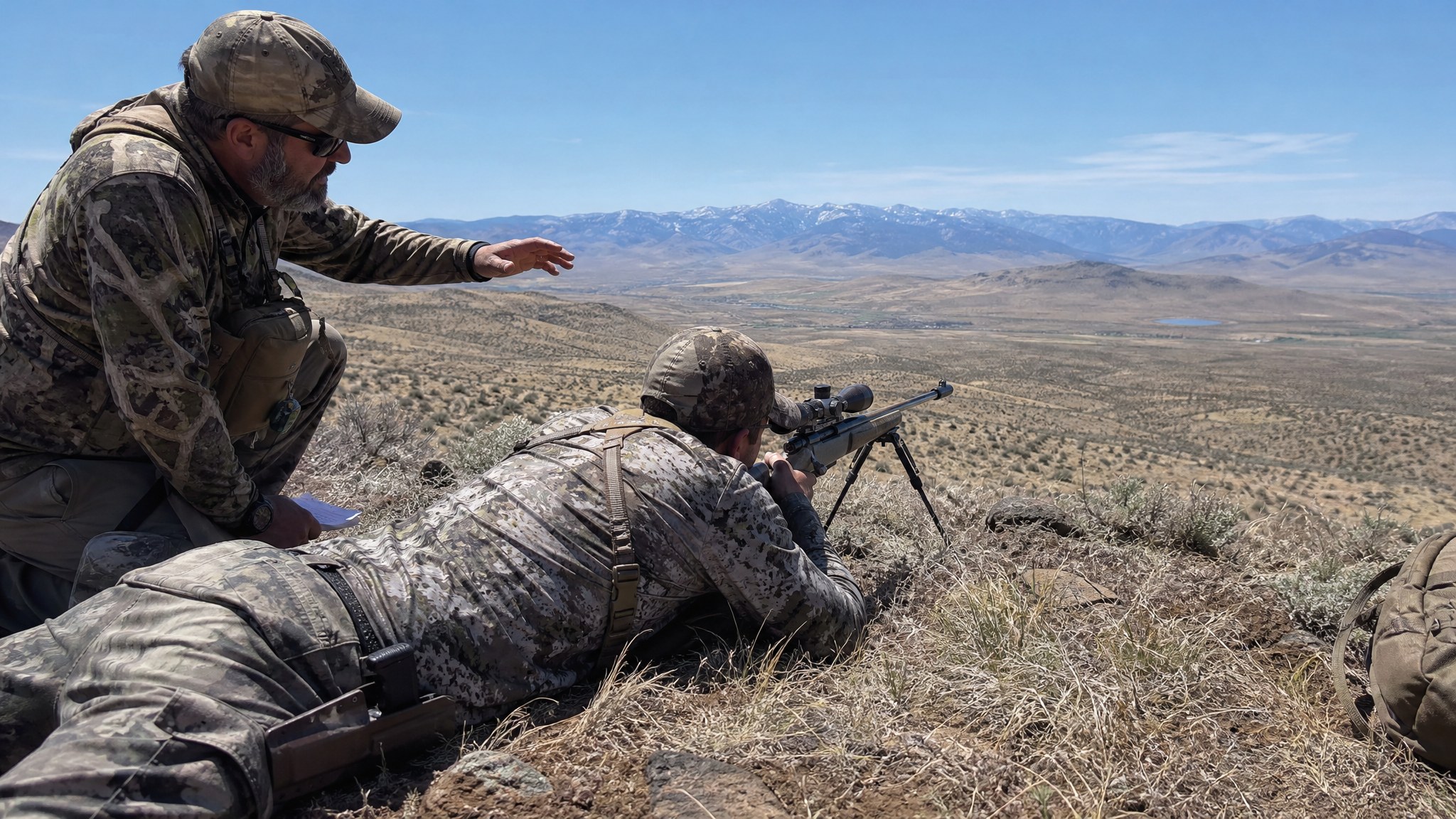
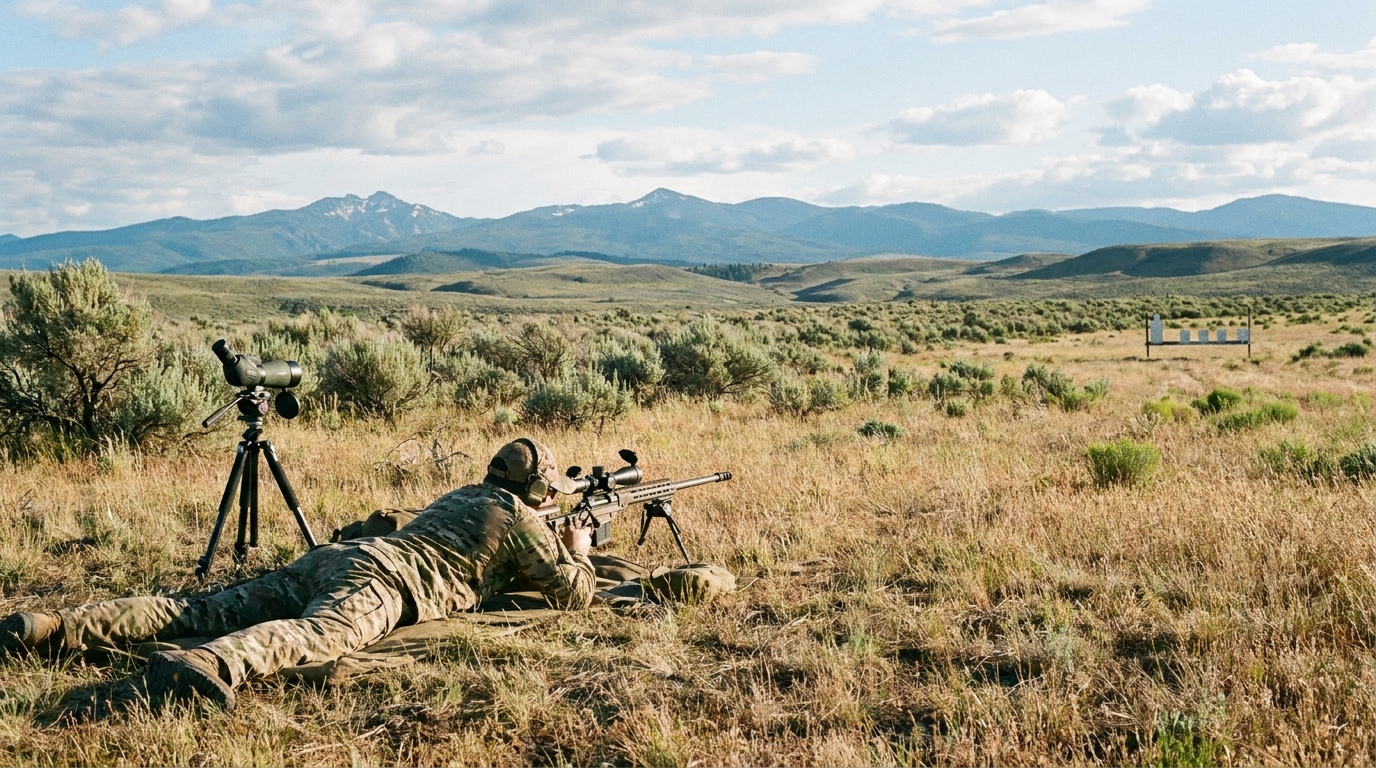
For precision shooting at long range, prone with a bipod and rear bag is the gold standard. The prone position provides a low center of gravity, maximizes contact with the ground for stability, and minimizes shooter movement. For field hunting applications, you'll often need to improvise — pack frame, rolled pack, shooting sticks — but the principles remain the same: maximize support, minimize movement, and use your natural point of aim.
Natural point of aim (NPOA) is critical. Your rifle should be pointed at the target when your body is completely relaxed — if you have to muscle the rifle onto the target, your shot will pull as muscles tire. Set up prone, close your eyes, take a breath, and open them. If the reticle has drifted off target, adjust your body position, not the rifle.
Trigger Control
The trigger is where most accuracy is lost at long range. A heavy, creepy trigger makes it nearly impossible to fire without disturbing the rifle's position. An aftermarket trigger (Timney, Jewell, Triggertech) that breaks at 2–2.5 pounds with minimal takeup and zero overtravel will make a measurable improvement in your groups. More importantly, learn to press the trigger straight rearward without anticipating the shot or muscling through a heavy break.
Dry fire is the single most effective practice for trigger control. Ten minutes of dry fire a day for a month will make you a measurably better shooter.
Wind Reading: The Skill That Separates Good from Great
Wind is the most variable and uncontrollable factor in long-range accuracy, and it's the skill that most shooters underinvest in. A 10 mph full-value crosswind at 1,000 yards deflects a 6.5 Creedmoor bullet approximately 14 inches. Getting that estimate wrong by 5 mph gives you a 7-inch miss. Wind reading is an observational skill developed over years of range time and hunting, not something you can shortcut with a Kestrel alone.
Read your wind indicators: mirage through the scope, vegetation movement, dust, and the feel on your face. Mirage in particular can tell an experienced shooter the precise wind speed and direction through a quality scope. Invest time in learning to read it.
Long-range shooting is a craft. Approach it systematically, build your fundamentals before chasing extreme range, and log everything you shoot. The data you collect on your own ballistics and positions is irreplaceable.