Hunting coyotes on pressured ground is a chess match. These animals learn fast — they've been called at, shot at, and educated by dozens of hunters before you. But with the right approach, you can still tag dogs that have seen it all.
Step 1: Scout Before You Hunt
Pressured coyotes shift their patterns. Use aerial maps and OnX to identify less-pressured areas: private land edges, timber company ground, or terrain features that other hunters avoid. Look for tracks, scat, and kill sites. Fresh sign beats assumptions every time.
Step 2: Wind is Everything
Set up so the wind carries your scent away from where you expect coyotes to come from. Pressured dogs circle downwind before committing — they've learned to use their nose before their eyes.
- Hunter: Sit south of your caller so the wind carries scent away.
- Caller + Decoy: Place upwind (north).
- Coyotes: Most will circle downwind (south), right into your shooting lanes.
Step 3: Call Sequences That Work
All-Season Sequence (18–22 minutes):
- 0–2 min: Low vole/rodent squeaks (soft).
- 2–4 min: Silence, scan downwind.
- 4–8 min: Light rabbit/bird distress (low to medium).
- 8–10 min: One or two lone howls, then pause.
- 10–14 min: Distress again at slightly higher volume.
- 14–18 min: Pup distress / ki-yi (medium-high).
- 18–22 min: Sit silent, watch downwind.
Breeding/Winter Sequence (Jan–Feb): Lone female howl → pause → Estrus whimpers/chirps → pause → Pair howl → pause → Pup distress/ki-yi at the end.
Pro Tip: Start quiet. Educated coyotes often live closer than you think, and blasting the first sound can spook them.
Step 4: Stand Discipline
- Sit for 18–22 minutes — pressured coyotes often come late.
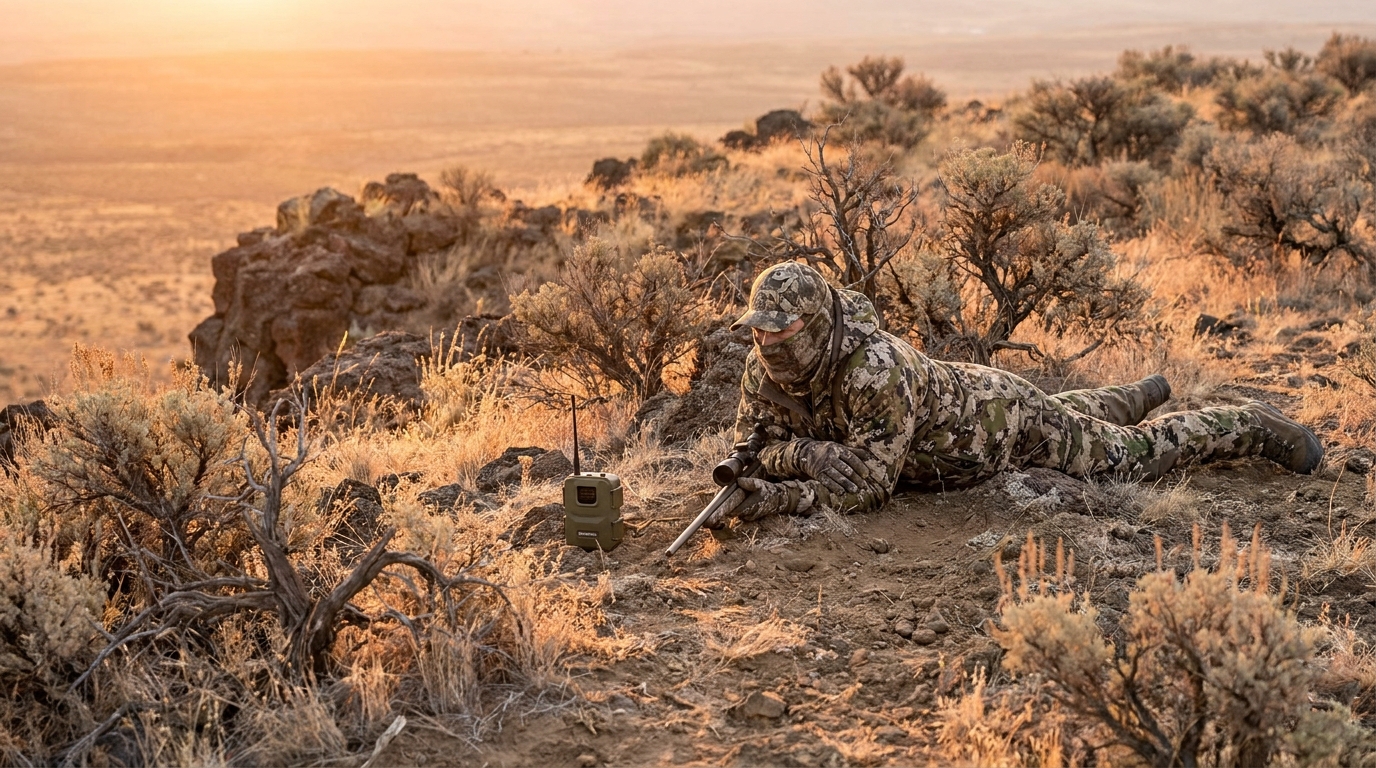
- Stay still — most blown stands are from hand/face movement.
- Always cover downwind. That's where coyotes disappear if you're not ready.
- If hunting with a buddy, assign one shooter to downwind, one to crosswind.
Step 5: Gear That Helps
- Rifle: .223, .22-250, or .243 with quality varmint bullets.
- Shotgun: #4 buck or T-shot for close cover under 40 yards.
- Calls: E-caller + at least one open-reed howler.
- Optics: Binoculars and a rangefinder are worth their weight.
- Navigation: OnX/Gaia or similar to confirm land access.
Common Mistakes to Avoid
- Sitting with your downwind blocked (you'll never see them).
- Calling the same stands too often (coyotes get educated fast).
- Blasting volume right away instead of starting quiet.
- Short sits — pulling out at 7 minutes when the coyote would have come at 15.
- Parking the truck in plain sight and slamming doors.
Final Thoughts
Coyotes are survivors. They've heard every rabbit distress in the book, and they'll test your patience and woodsmanship. But that's exactly why calling one in — especially a pressured, educated dog — is so rewarding. Stick to the fundamentals: respect the wind, stay still, rotate your stands, and vary your sounds. Hunt smart and consistently, and eventually those dry stands will turn into fur on the ground.