The .308 Winchester is the best cartridge to start reloading with, and I'm not saying that just because it's one of the most popular rifle rounds in North America. I'm saying it because it's forgiving, well-documented, and the components are universally available. If you want to learn to reload — and you should, because it will change how you understand ammunition and ballistics — the .308 is your classroom cartridge.
Equipment You'll Need
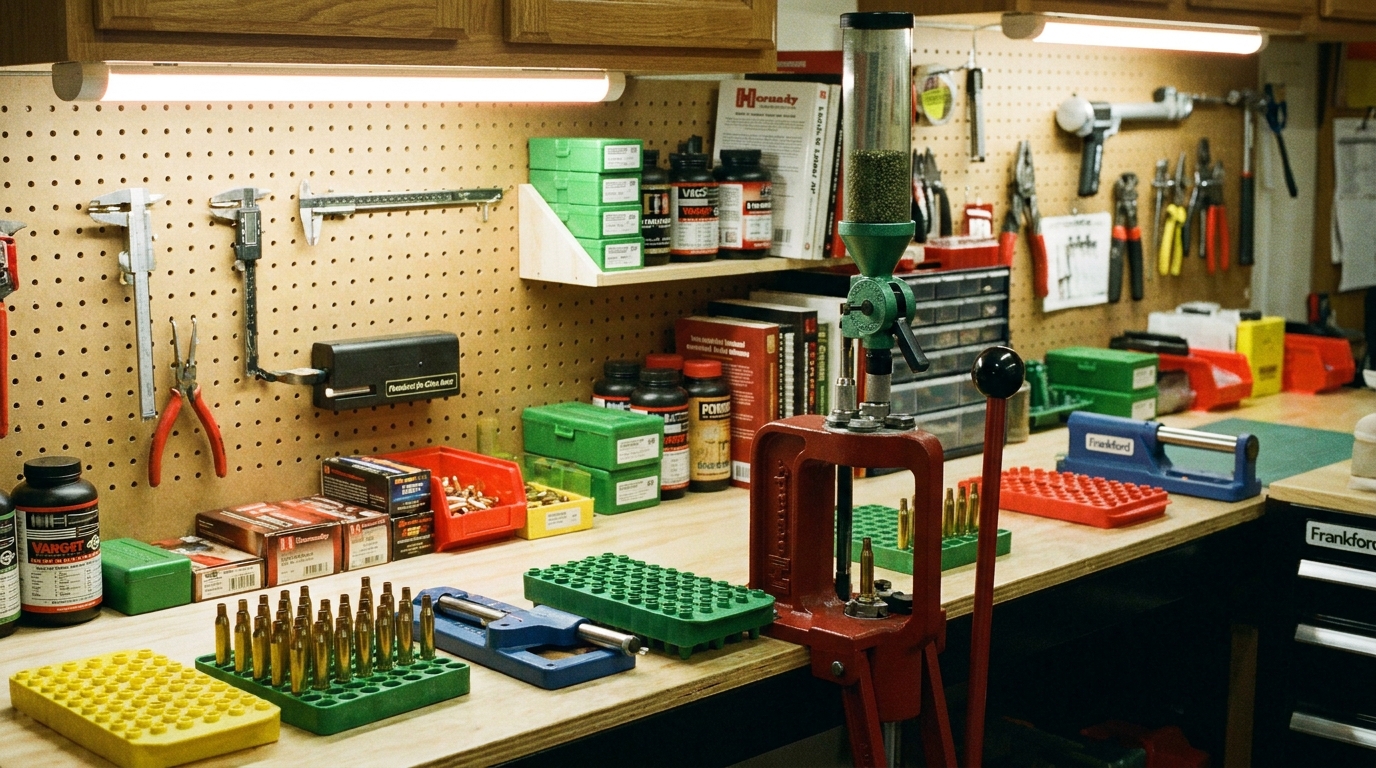
Before you start, you need a few essential pieces of equipment. A single-stage press is what I recommend for beginners — it forces you to do one operation at a time, which slows you down and makes it much harder to make a dangerous mistake. The Lee Classic Cast press is an excellent entry-level option. Dillon and Redding make superb single-stage presses if you want to invest for the long term.
- Press: Single-stage for beginners
- Die set: RCBS, Redding, or Hornady .308 Winchester three-die set (size, seat, crimp)
- Case trimmer: Case length is critical — trim to 2.005" for .308 Win
- Tumbler and media: Wet or dry tumbling to clean brass
- Powder scale: Electronic preferred; a balance beam as backup
- Powder measure: Throws consistent charges when set properly
- Calipers: 6-inch digital for measuring case and cartridge length
- Reloading manual: At minimum one current edition (Lyman, Hornady, or Nosler)
- Priming tool: Hand priming tool for better feel and consistency
The Reloading Process: Step by Step
Step 1: Inspect and Clean Brass
Start with clean, inspected brass. Tumble your fired cases until they're shiny and clean. Inspect each case for cracks, splits at the neck, or head separation. Toss any suspect brass. This is safety step one.
Step 2: Size and Deprime
Run each case through the full-length sizing die. This resizes the case to factory SAAMI specifications and removes the spent primer. Apply a very light coat of case lube before sizing — you do not want a stuck case in your die. Imperial Sizing Die Wax or a spray lube both work well.
Step 3: Trim to Length
After sizing, case length increases slightly due to brass flow. Trim to 2.005" (SAAMI spec is 2.005" max). Consistent case length gives consistent neck tension on the bullet, which translates to more consistent velocities. Deburr and chamfer the case mouth after trimming.
Step 4: Prime
Seat a new primer using a hand priming tool. For .308 Win, you're using Large Rifle primers — Federal 210 or CCI 200 are reliable standards. Seat primers slightly below flush (approximately 0.003–0.005" below the case head). A primer seated too high can cause slamfires.
Step 5: Charge with Powder
Consult your reloading manual for a starting load. A classic starting point for .308 Win with a 168-grain match bullet (Sierra MatchKing, Hornady BTHP) is IMR 4064 or Varget powder in the 41–44 grain range. Start at the minimum listed load and work up in 0.5 grain increments, watching for pressure signs (flattened primers, stiff bolt lift, case head expansion).
Step 6: Seat the Bullet
Set your seating die to achieve the desired cartridge overall length (COAL). For .308 Win with a 168gr bullet, SAAMI max is 2.800". For magazine-fed semi-autos, stay at or under 2.800". For bolt guns, you can experiment with seating the bullet closer to the lands for accuracy, but start at published COAL when developing a load.
Safety Above Everything
Never exceed maximum published loads. Never substitute components between load data — a powder charge developed for one bullet weight is not safe with a different weight. Keep a detailed log of every load you develop. Reload in good lighting, without distractions, and double-check every powder charge.
Reloading rewards patience and precision. Your first .308 load may not be perfect, but it will teach you more about this cartridge and how it works than any factory ammunition ever could.