Primers are the smallest component in a loaded cartridge, but they have an outsized effect on accuracy, reliability, and pressure. The difference between a standard and magnum primer, or between brands with different sensitivity and output ratings, can shift your point of impact, change your extreme spread, and in worst-case scenarios, affect safety. Understanding how to select the right primer for your cartridge and application is fundamental handloading knowledge.
Primer Basics: What They Do
A primer is a small, cup-shaped device containing a primary explosive compound — typically lead styphnate and a small amount of fuel and oxidizer — that ignites when struck by the firing pin. The resulting flash ignites the main powder charge. The primer's output (the size and duration of the flame) affects how quickly and completely the powder charge ignites, which directly influences velocity consistency (ES/SD) and pressure curve.
Primers come in four basic types based on size and application:
- Small Pistol: 9mm, .38 Special, .357 Magnum, .45 ACP (some loads)
- Large Pistol: .45 ACP (most loads), .44 Magnum, .357 Magnum (some loads)
- Small Rifle: .223 Rem/5.56, .222 Rem, 6mm PPC
- Large Rifle: .308 Win, .30-06, .243 Win, 6.5 Creedmoor, most rifle cartridges
Magnum versions of each type deliver a hotter, longer-duration flame, intended for large powder charges, ball powders that are harder to ignite, or cartridges with large case capacity like .338 Win Mag or .300 RUM.
When to Use Magnum Primers
Standard primers work for the vast majority of rifle and pistol loads. Use magnum primers when the reloading manual specifies them, when using ball powders that can be difficult to ignite (like H110/W296 in magnum revolver cartridges), and in large-capacity magnum cartridges. Using a magnum primer when a standard is specified will increase pressure — sometimes significantly. Never substitute magnum for standard without checking data.
Brand Differences Matter
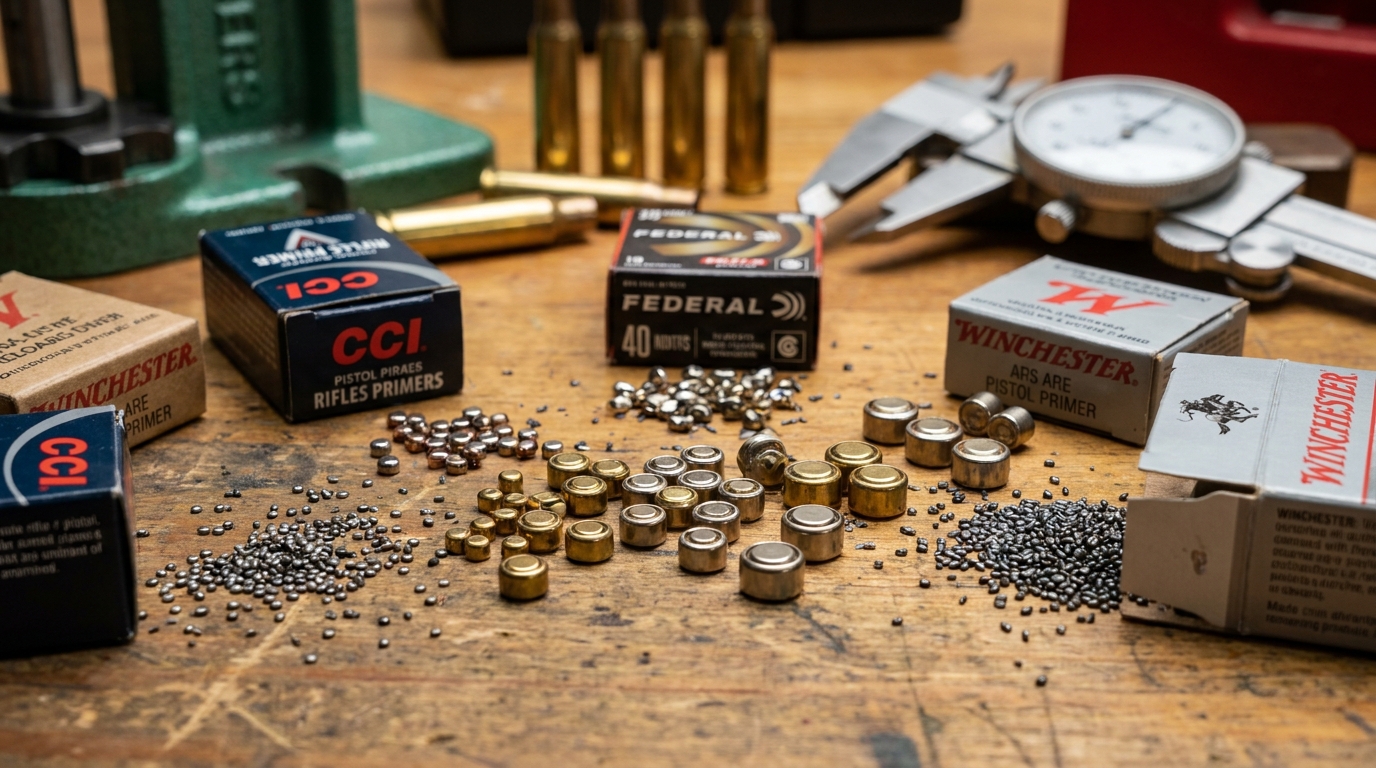
The major brands — Federal, CCI, Remington, Winchester, and European brands like Murom and Wolf — don't all perform identically, even in the same category. Load data published in a manual was developed with specific components, and the primer brand is part of that specification.
- Federal 210 / 210M: Known for high sensitivity and consistent output. Often produces the tightest ES numbers in precision rifle applications. The 210M (magnum) is widely used in .308 competition loads even though standard primers technically suffice — the hotter flash lights extruded powders very consistently.
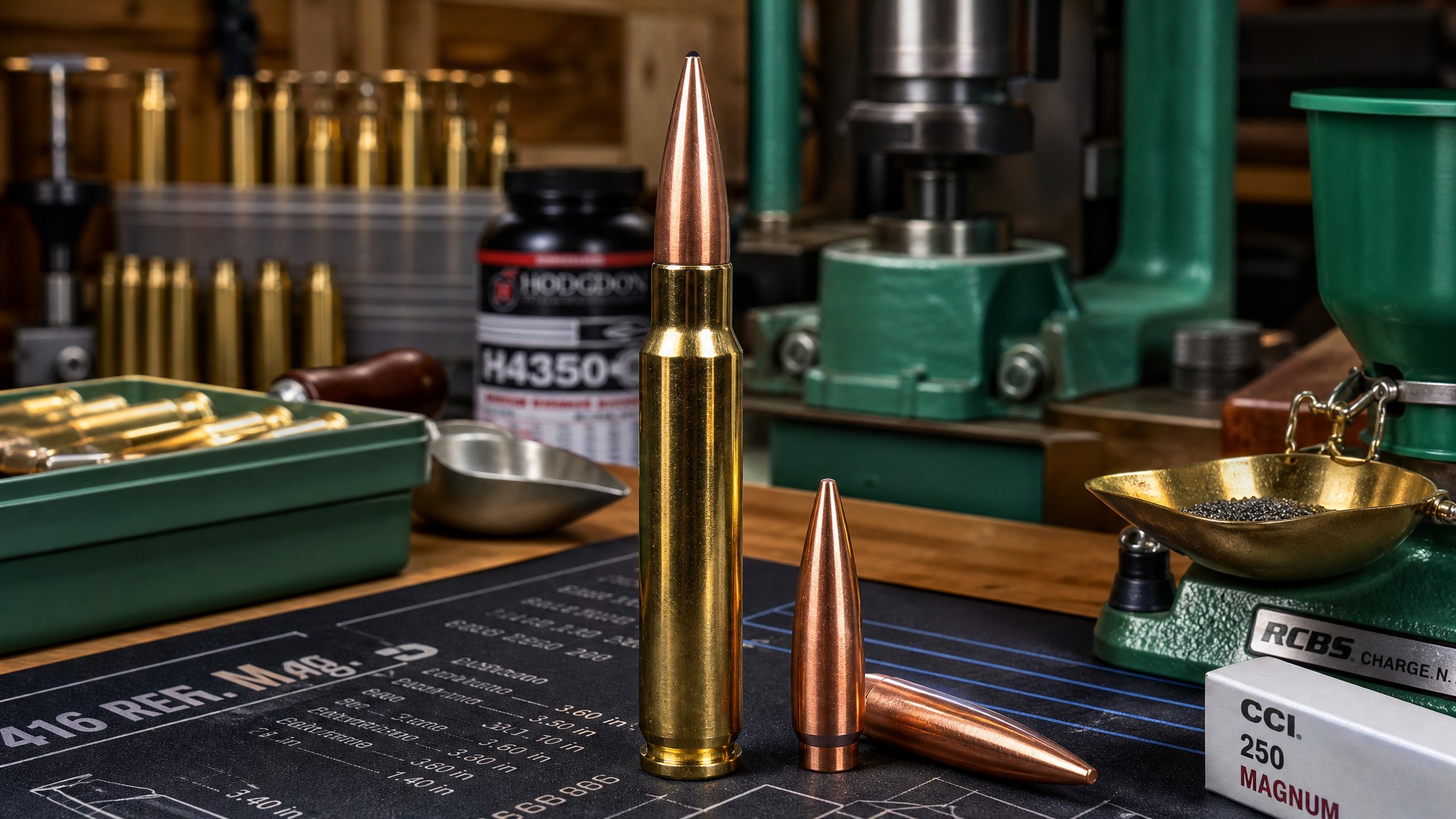
- CCI 200 / 250: Excellent all-around standard and magnum large rifle primers. Very reliable and available. Slightly harder cup than Federal — reduces the risk of slam-fires in semi-autos.
- Winchester WLR: A good all-around standard large rifle primer. Functions well with most powders and is generally available.
- Remington 9½: Very popular in .308 and general rifle work. Consistent and widely used.
Primer Seating Depth
How deeply a primer is seated affects its output consistency and can influence pressure. A primer seated too high (above flush) creates a risk of ignition from case contact in the magazine or chambering. Primers should be seated 0.003–0.005" below flush with the case head. Use a hand priming tool for better feel — you should feel the primer "bottom out" with firm, consistent pressure.
Safety Notes
Primers are a primary explosive. Never attempt to dismantle, modify, or reuse spent primers. Store primers in their original trays in a cool, dry location away from heat sources. A primer fire in a closed container is a serious hazard — keep quantities reasonable and never store primers near bulk powder.
Take primer selection seriously. It's the smallest decision in the loading sequence but not the least important one. Match your primer to your published data, seat it correctly, and your ammunition will perform consistently every time.