Central Oregon has more quality trout water per square mile than almost anywhere in the West, and the insects that drive those fisheries follow a calendar that any serious angler should know by heart. From the spring Skwala stonefly emergence to the fall Mahogany Dun hatches, matching the hatch on Central Oregon rivers and lakes can turn a slow day into an unforgettable one. Here's the breakdown by season with specific patterns that have produced for me year after year.
Early Season: March–April
The Skwala stonefly is Central Oregon's first significant hatch of the year. Starting in mid-March on the lower Deschutes and Crooked River, these size #8–10 stoneflies get big trout looking up after a long winter. The hatch is sparse but the fish are eager. A dark Stimulator or a Skwala dry with an appropriate body color fished in slow eddy water near the bank is a deadly combination.
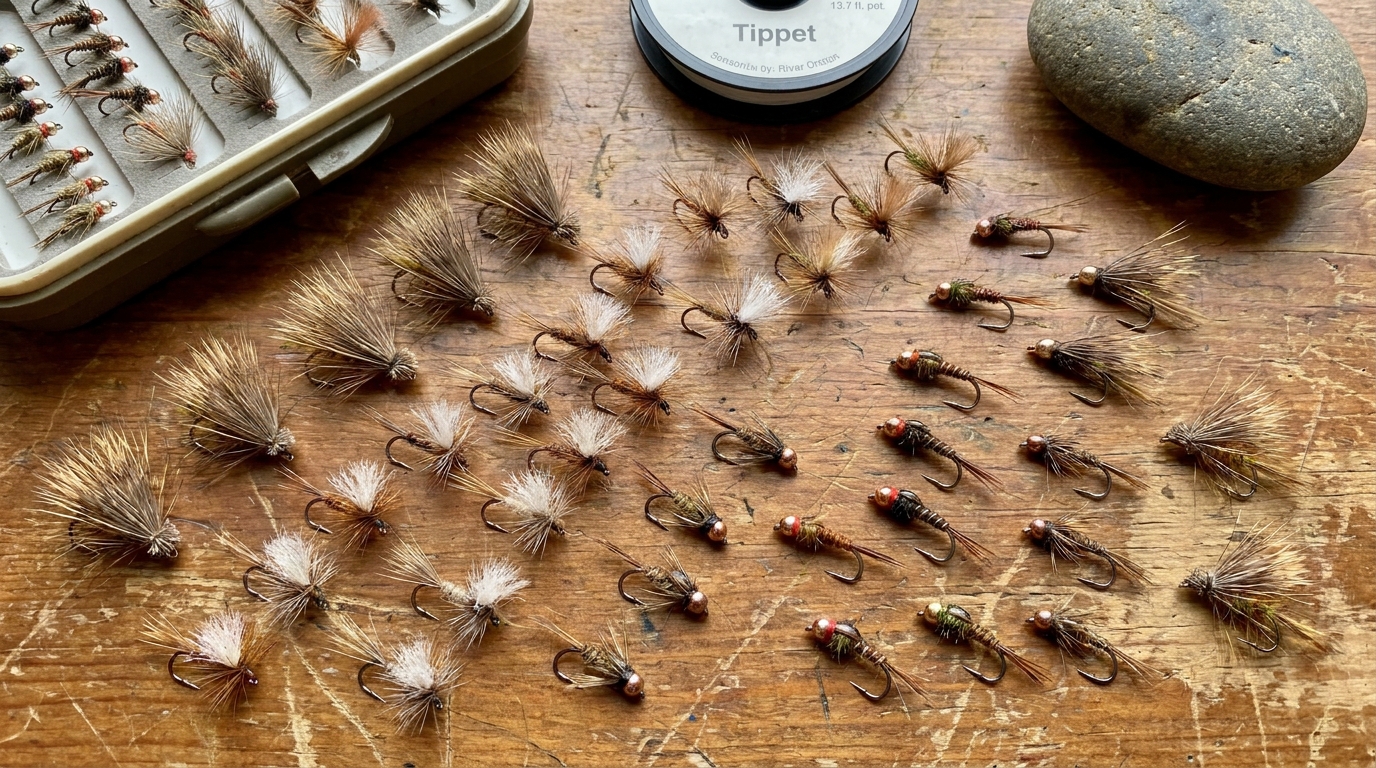
Early Blue-Winged Olives (BWO) also emerge during rainy, overcast days in March and April, especially on the Crooked River and in the calmer stretches of the Deschutes. Size #18–22 Parachute BWOs or comparaduns fished to rising fish in flat water will test your skills and your eyesight.
Prime Season: May–July
May through July is when Central Oregon trout fishing reaches its peak. The PMD (Pale Morning Dun) hatch begins in May and runs through midsummer, producing reliable midday hatches that bring fish to the surface on nearly every river in the region. Green Drake emergers in late May and June on the Upper Deschutes are worth chasing — big flies bring big fish to the top.
The Salmonfly hatch in June is arguably the event of the year on the lower Deschutes. You can time it roughly — it starts near the Columbia confluence around mid-June and works upstream, reaching Warm Springs around late June or early July. The window is short, often 7–10 days at any given location, but when you hit it right, every big trout in the river is looking up.
Essential May–July Patterns
- Parachute PMD #16–18
- Sparkle Dun (PMD) #16
- Stimulator (Salmonfly) #4–6
- Elk Hair Caddis #14–16
- Green Paradrake #10–12
- Copper John nymph #12–14 (dropper)
Summer and Transition: August–September
Summer caddis fishing on Central Oregon rivers is underrated. Evening caddis hatches on the Deschutes from late July through September can produce explosive dry fly action as the light fades. Elk Hair Caddis and X-Caddis in #14–16 are staples. The slower daytime periods call for terrestrial patterns — ants, beetles, and hoppers fished tight to the bank where trout are looking for terrestrial insects falling in from streamside vegetation.
Fall: October–November
The Mahogany Dun (Paraleptophlebia) is the secret weapon of fall fishing in Central Oregon. These dark #14–16 mayflies hatch on cool, overcast afternoons from September through November, and the fish key on them hard. A Mahogany Comparadun or Parachute Adams in the right size fished during the afternoon hatch window will consistently produce takes from selective fish that ignore everything else.
Blue-Winged Olives return in force during fall, hatching from midday through afternoon on overcast days. On the Crooked River, fall BWO hatches can be as good as anything you'll see all year.
Learn the hatch calendar, stock your box accordingly, and be willing to observe the water for 15 minutes before you start casting. What's on the water tells you everything you need to know.