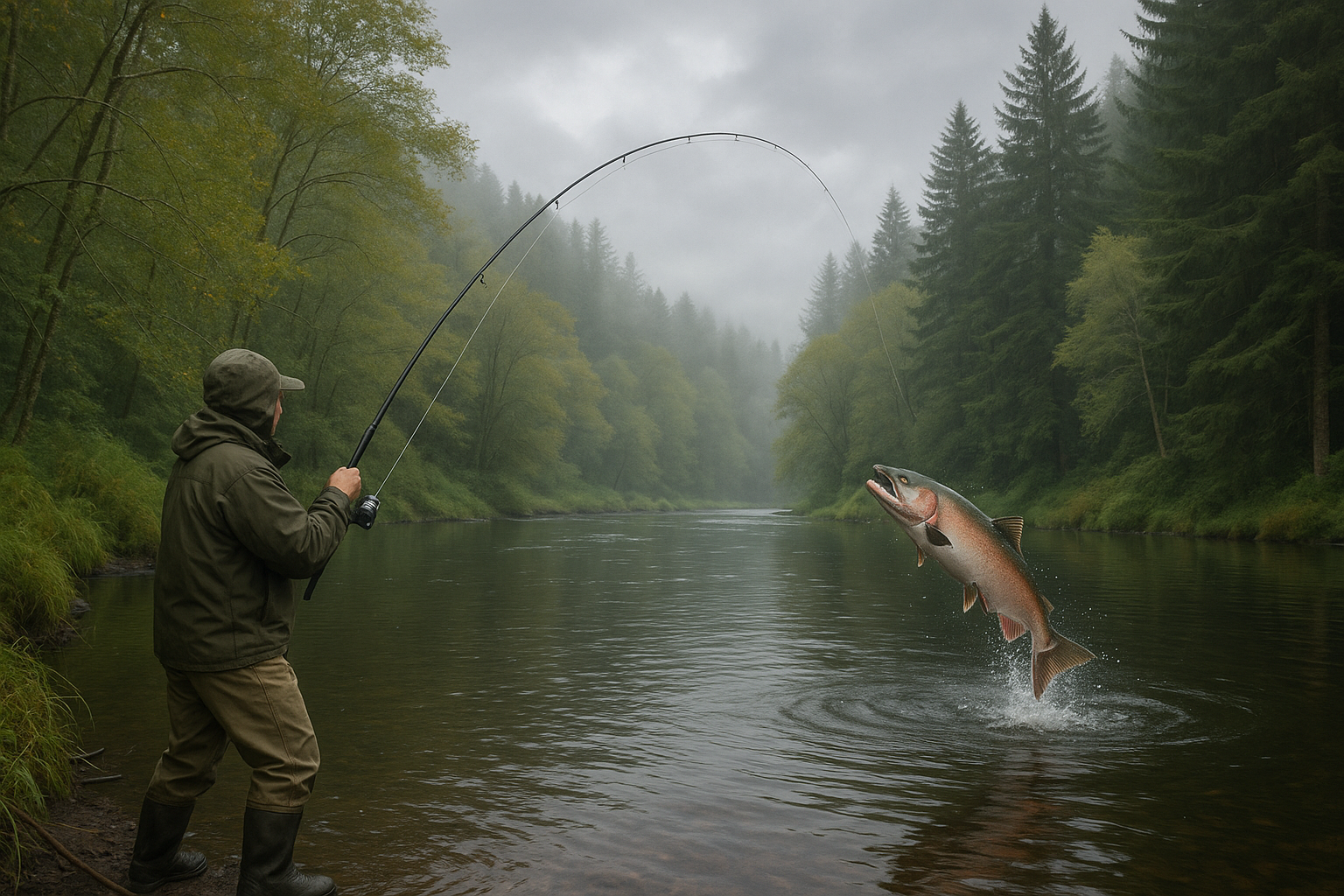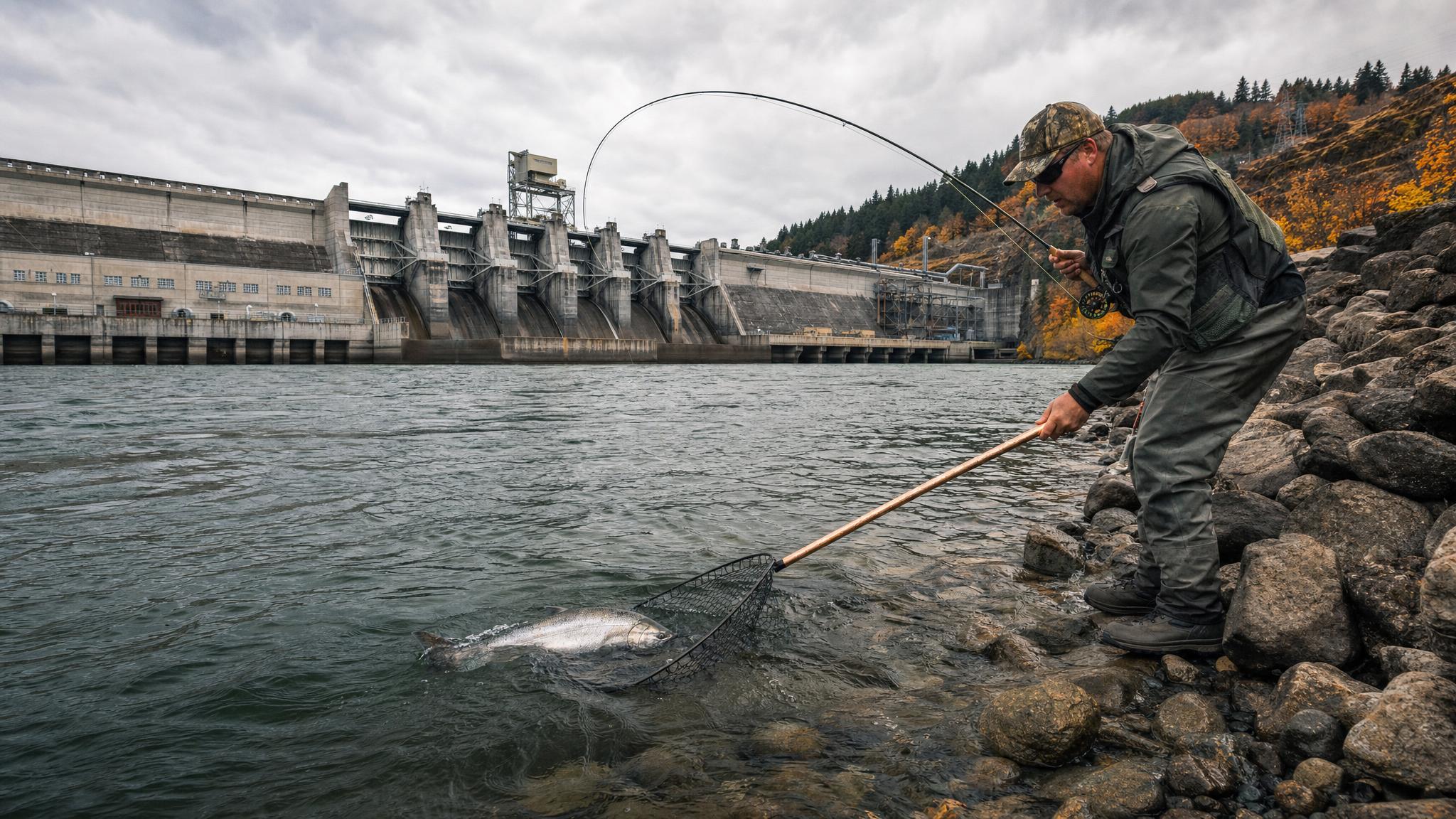
I've fished a lot of Oregon's winter steelhead rivers, but the North Umpqua holds a special place for me. The river is simultaneously one of the most beautiful and most demanding steelhead fisheries in the state. The fish are wild, powerful, and earned. The canyon is dramatic. And the regulation history — the upper river's fly-only section is legendary — gives the whole experience a sense of tradition that's increasingly rare in modern fishing.
The North Umpqua in Winter
Winter steelhead typically begin entering the North Umpqua in November and run through March, with peak numbers in December through February depending on water conditions. Unlike summer steelhead, which are often caught in low, clear water with lots of visual opportunities, winter fish move in higher, colored flows. You're fishing by feel and knowledge of where fish hold rather than sight.
The river runs through Douglas fir and tanoak forest with dramatic green water that turns from emerald to jade as flows increase. When the river is between 400 and 1,200 cfs at the Glide gauge, conditions are generally fishable and productive. Above 2,000 cfs it gets tough. Below 300 in summer the river is gin-clear and excellent for summer steelhead — but that's a different fish and a different game.
Access and Key Sections
The North Umpqua Road (Highway 138) follows the river for nearly 80 miles east from Roseburg. Major access points include Whistlers Bend (good winter run water), Susan Creek, the Rock Creek confluence (excellent), and the upstream reaches toward Steamboat. Steamboat itself marks the lower boundary of the famous fly-only water that runs upstream — one of Oregon's most storied fishing traditions.
For winter steelhead, I concentrate my efforts on the lower and mid-river sections where fresh fish stack on their upstream push. Deep pools on the inside of bends, the tail-outs above riffles, and the long flat runs between rapids all hold winter fish.
Gear and Tactics
A medium-heavy single-hand spinning rod with 15–20 lb mono or 30 lb braid is the workhorse setup for most winter fishing. Back-bouncing or drift-fishing with 3/4 to 1 oz pencil weights above a swivel and 18–24 inch leader to a hook baited with sand shrimp or eggs is the standard approach. Steelhead in colored winter water respond to scent as much as appearance — fresh coon shrimp or brined roe are hard to beat.
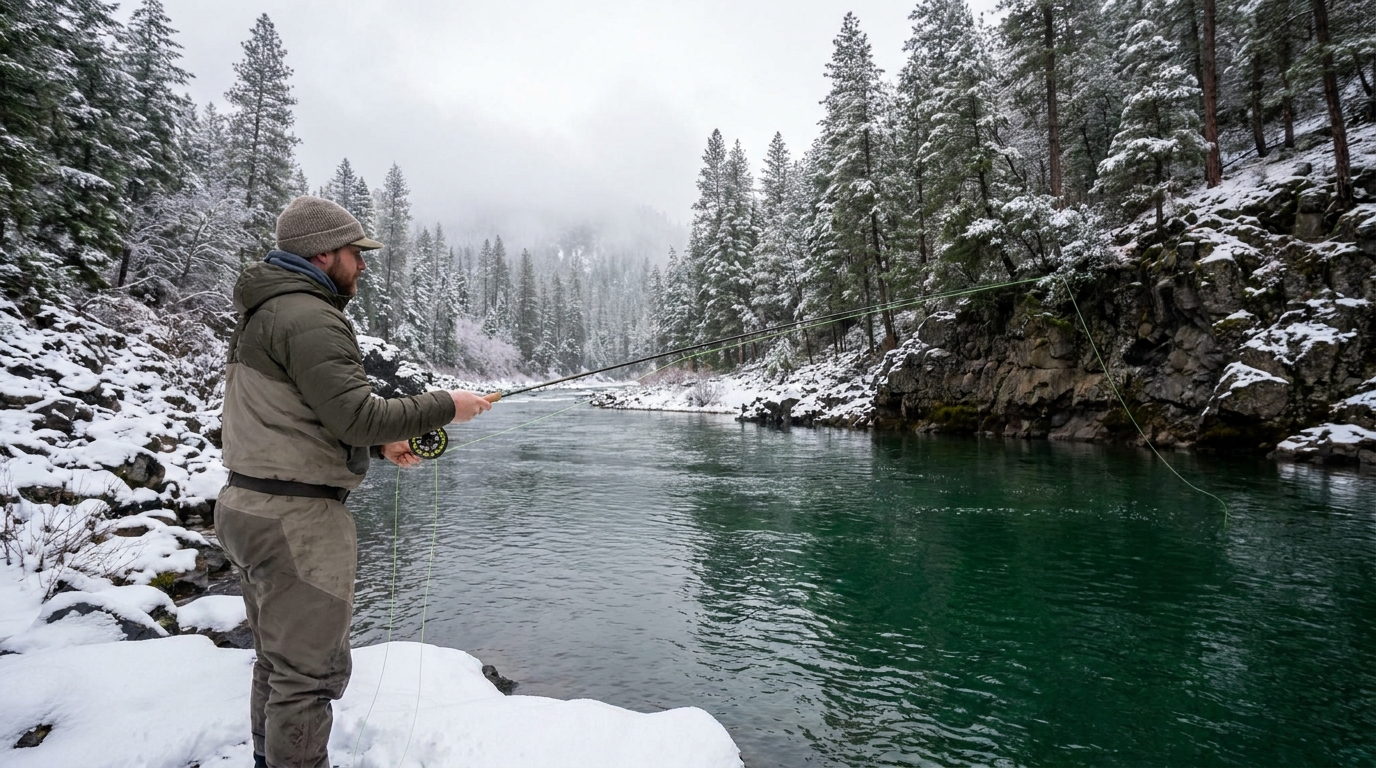
For fly fishers, a 9-weight with a Type 3 or sink-tip line matched to flows is necessary to get the fly down. Black and orange is a classic color combination; purple works equally well in the North Umpqua's green water. Intruder-style patterns, Marabou Spiders, and traditional steelhead wets all have their advocates on this river.
What to Expect
Winter steelhead fishing is not fast fishing. An average day on the North Umpqua might produce one to three hookups if you're covering water effectively. You're rewarded with wild fish — unclipped, unhandled, ocean-bright, and furious. A fresh hen in January, running hard downstream with 100 feet of line out and you hanging on, is worth every cold, wet hour it took to find her.
The North Umpqua rewards the patient and the persistent. Drive the 138, learn the pools, and put in your time. It's a river that will teach you steelhead fishing if you let it.