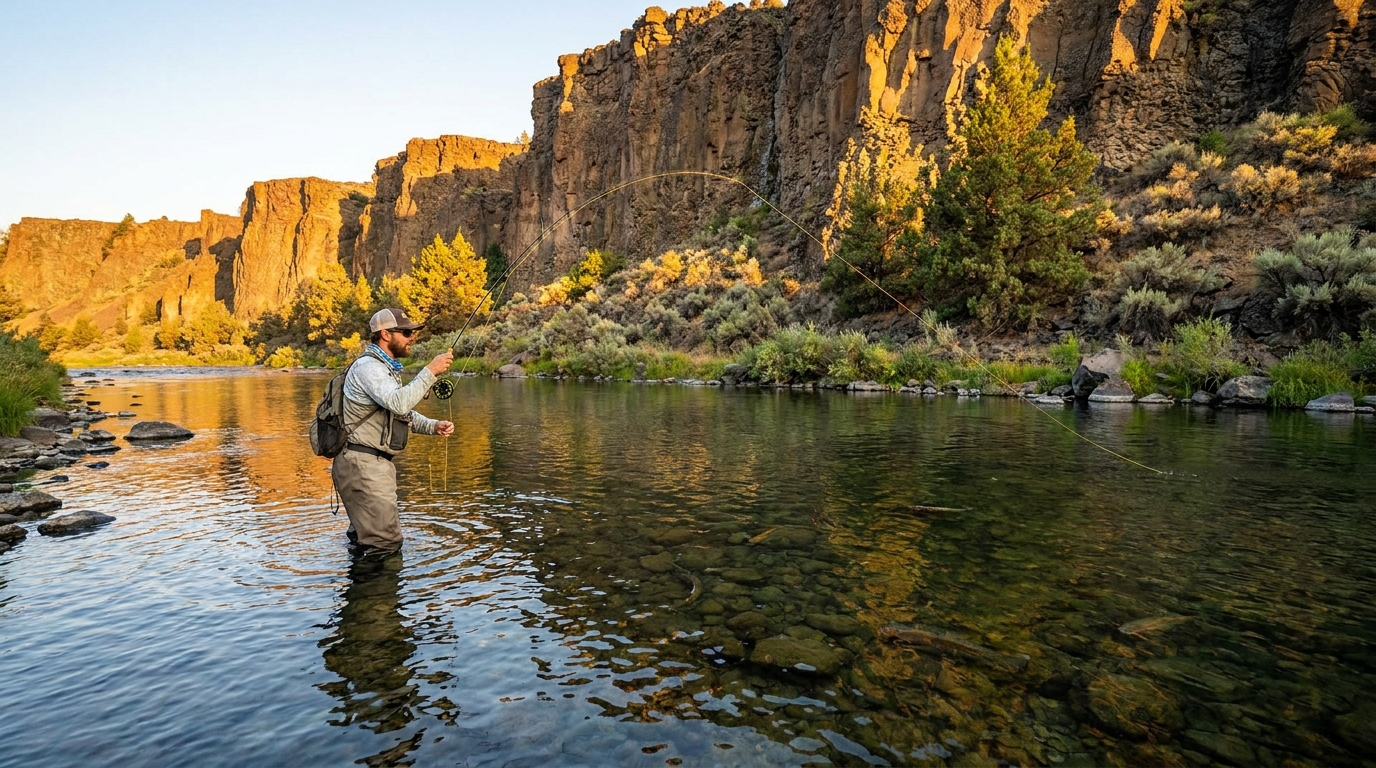
The Deschutes River is Oregon's crown jewel for fly fishing, and if you haven't waded its basalt banks with a rod in your hand, you're missing one of the premier trout and steelhead fisheries in North America. I've fished the Deschutes since I was a kid, and every year it still surprises me. Red-sided rainbow trout that eat dry flies with reckless aggression, wild summer steelhead that pull your backing off the reel, and scenery that looks like it was designed for a magazine cover. Here's what you need to know.
The Lower Deschutes (Macks Canyon to Columbia Confluence)
The lower 100 miles of the Deschutes below Sherars Falls is the famous section — the roadless canyon that requires either a float trip or a long hike. The trout fishing here is exceptional for red-sided rainbows averaging 12–16 inches with plenty of fish in the 18–22 inch range. These fish are wild, selective, and athletic. They'll break your heart and make your season.
The lower canyon is also the summer steelhead corridor. From July through October, wild summer steelhead move through in waves. Traditional wet fly swinging on a spey rod is the iconic method, but single-hand anglers with a sink-tip and a classic wet fly pattern can absolutely be effective.
Key Sections and Access
- Warm Springs to Macks Canyon: Road-accessible, heavily fished on weekends but excellent on weekdays. Good trout water all year.
- Macks Canyon to Colorado: Backcountry canyon, hike or float in. This is the trophy section. Fewer anglers, wilder fish.
- Colorado to Heritage Landing: Classic steelhead run. Native fish, technical water.
The Hatch Calendar
The Deschutes has one of the best hatch calendars in the West. The famous Salmonfly hatch (Pteronarcys californica) runs from mid-June through early July, starting at the lower canyon and moving upstream. These massive stoneflies bring big trout to the surface for weeks. This is the event that draws anglers from across the country — and for good reason.
The Golden Stonefly hatch follows close behind in late June and July. PMDs (Pale Morning Duns) hatch reliably from May through August in the afternoon. Caddis — especially the evening hatch — fish well from June through September. Mahogany Duns in September and October provide excellent fall dry fly fishing as the tourist crowds thin out.
Fly Patterns That Work
- Salmonfly season: Kaufmann's Stimulator #4–6, Sofa Pillow, Chubby Chernobyl
- Summer trout: Parachute Adams #14–18, Elk Hair Caddis #14–16, CDC comparadun
- Steelhead: Muddler Minnow, Skunk, Brad's Brat, October Caddis (wet), Purple Peril
- Nymphing: Copper John, Hare's Ear, Pheasant Tail in #12–16
Regulations and Etiquette
The Deschutes is a selective harvest fishery below Pelton Dam — check current ODFW regs before you go. Wild steelhead are catch-and-release only. Hatchery steelhead (identified by a clipped adipose fin) have a limited harvest allowance. The canyon culture has an etiquette — give other anglers room, don't crowd a run, and wave when you're moving through. Most Deschutes regulars are friendly and will point you in the right direction if you're new to the river.
The Deschutes deserves your time and your respect. Fish it slow, fish it smart, and it will give you memories that last a lifetime.