When it comes to long-range shooting, the 7mm Remington Magnum is a popular choice among hunters and shooting enthusiasts. This powerful cartridge, known for its flat trajectory and high velocity, is ideal for taking down big game at impressive distances. However, understanding its ballistics can be a bit complex. In this guide, we'll delve into the essential aspects of 7mm Mag ballistics, including bullet drop, trajectory, and ballistic charts.
The Basics of 7mm Mag Ballistics
The 7mm Remington Magnum, often referred to as the 7mm Mag, was introduced in 1962 by Remington Arms. It quickly gained popularity due to its versatility and performance. The cartridge is based on the .375 H&H Magnum, but it's necked down to accept a 7mm bullet, which measures approximately 0.284 inches in diameter.
The 7mm Mag is renowned for its flat trajectory and long-range capabilities. This is largely due to its high velocity and ballistic coefficient, which allow it to maintain energy and speed over long distances. These features make it a favorite among hunters targeting large game like elk, deer, and moose.
Understanding Bullet Drop
Bullet drop is a critical factor in long-range shooting. The bullet drop for a 7mm Mag can vary depending on several factors, including bullet weight, muzzle velocity, and environmental conditions. Considering a 150-grain bullet:
- At 100 yards: negligible drop, typically within an inch.
- At 300 yards: approximately 6 to 8 inches of drop.
- At 500 yards: expect a drop of approximately 25 inches.
- At 1000 yards: the drop can exceed 200 inches.
Using a 7mm Rem Mag bullet drop chart or ballistic calculator will give you more precise data tailored to your specific load and conditions.
The Trajectory of the 7mm Mag
A trajectory chart provides a visual representation of a bullet's path. For the 7mm Mag, the trajectory is relatively flat compared to other calibers, especially within 300 yards. Beyond this range, the curve becomes more pronounced, but it remains manageable for experienced shooters.
Using a 7mm Rem Mag trajectory chart will help you visualize how the bullet travels and adjust your aim accordingly. At 200 yards, the trajectory might be almost flat, while at 400 yards you'll need to account for a few inches of drop.
Ballistics Charts and Tables
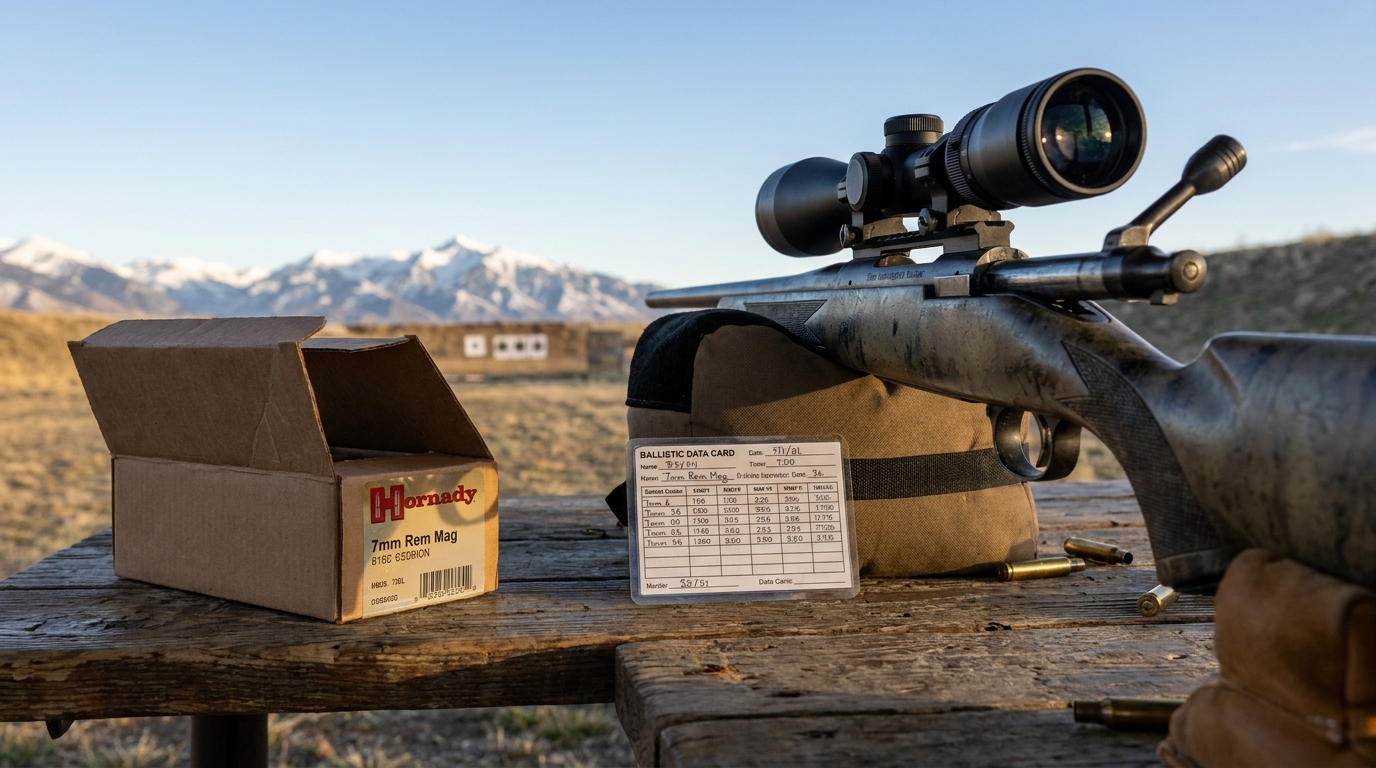
A typical 7mm Mag ballistics chart will include data on various bullet weights and types, showing how they perform at different ranges. Key metrics include muzzle velocity, energy at specific distances, bullet drop in inches, and wind drift. These charts help you compare different loads and choose the one that best suits your shooting needs.
Practical Applications for Hunters
For hunters, understanding 7mm Mag ballistics is crucial for successful outings. Whether you're targeting elk in the mountains or deer in open fields, knowing how your bullet will perform can make the difference between a clean kill and a missed opportunity.
- Know Your Load: Different bullet weights and types will perform differently. Familiarize yourself with your specific load's ballistics.
- Practice at Various Distances: Regular practice at different ranges will help you understand how your bullet drops and drifts in real-world conditions.
- Use Ballistic Calculators: These tools can help you predict bullet behavior based on environmental conditions like wind speed and direction.
- Zero Your Rifle Properly: For many hunters, zeroing at 200 yards matches their typical shooting scenario.
- Be Mindful of Conditions: Factors like altitude, humidity, and temperature can affect bullet performance.
Conclusion
The 7mm Remington Magnum is a powerful and versatile cartridge, favored by many for its excellent long-range capabilities. By understanding its ballistics, including bullet drop and trajectory, you can enhance your accuracy and confidence in the field. Utilize ballistics charts and tables, practice consistently, and tailor your approach to the specific conditions you'll face.